Latent Defects and Vendor Liability: Lessons from Austin v. MacFarlane
In the recent decision of Austin v. MacFarlane, 2026 ONSC 463, the Ontario Superior Court of Justice addressed the ongoing tension between a vendor’s silence



I was retained by Merton Thompson (“Merton”) in 2016. His young wife Elisha Shaw (“Elisha”), mother to his 4 children, had died after being discharged from the emergency department. Merton came to me looking for answers and accountability.
A Statement of Claim was issued in 2017 alleging negligence against several healthcare professionals. After going through all the requisite steps required of a civil action in Ontario, the case went to trial over 12 days in January, 2023 in Brampton, Ontario. The only defendant remaining by that time was the emergency medicine physician, Dr. Jeffrey Handler (“Dr. Handler”).
On September 6, 2023, the Honourable Mr. Justice William LeMay of the Ontario Superior Court of Justice found Dr. Handler negligent in his care of Elisha, which resulted in her death. A detailed summary of the trial decision can be found here.
Dr. Handler appealed the judgment against him to the Court of Appeal for Ontario. Today, the appellate court released its decision in Shaw Estate v. Handler dismissing Dr. Handler’s appeal and upholding the finding of medical malpractice. I am overjoyed that Merton and his family may now have some finality from Elisha’s tragic passing just over 10 years ago today.
I would like to specifically thank my partner, Chris Morrison, who took the lead on the appeal. His appellate advocacy skills are second to none and played an integral role in securing the successful outcome of this case. I would also like to thank my associate, Hudson Chalmers, who played a vital role at trial helping to secure the judgment that became the subject of his appeal.
This was an appeal of a medical malpractice lawsuit concerning the delayed diagnosis of an internal hernia, which led to the death of Elisha, a 34-year-old woman and mother of 4 young children. The appeal focused on the trial judge’s findings regarding liability, specifically whether Dr. Handler breached the standard of care and caused her death.
Elisha visited Brampton Civic Hospital on November 16, 2015, with severe abdominal pain. Dr. Handler discharged her the next morning after receiving an initial CT scan report indicating no abnormalities. However, shortly after her discharge, another radiologist informed Dr. Handler that the CT scan showed signs of a potential hernia. Dr. Handler did not contact Elisha or arrange for her return to the hospital. Elisha returned to the hospital by ambulance on November 18, underwent surgery for herniated and ischemic bowel tissue, and tragically passed away on November 25.
The trial judge found that Dr. Handler breached the standard of care by failing to act on the updated CT scan results and concluded that this negligence caused Elisha’s death. Dr. Handler appealed, arguing errors in the trial judge’s findings on the standard of care and causation. The Court of Appeal dismissed the appeal, ruling that the trial judge’s findings were sound and supported by evidence.
Elisha had undergone bariatric surgery in 2012. A known risk of this surgery is the potential for internal hernias due to shifting and tangling of the intestines. Elisha experienced ongoing abdominal pain and nausea after her surgery and had been prescribed opioids for pain management. A 2014 CT scan suggested a possible internal hernia, but a recommended diagnostic laparoscopy was never performed.
On November 16, 2015, Elisha visited the emergency department at Brampton Civic Hospital, reporting severe abdominal pain rated “10/10.” Dr. Handler, the on-duty emergency medicine physician, ordered blood work and a CT scan. The initial radiologist reported the scan as normal, and Dr. Handler discharged Elisha the next morning, believing her pain had decreased. He advised her to schedule an expedited appointment with her bariatric surgeon, which she did for the following week.
Shortly after her discharge, another radiologist reviewed the CT scan and informed Dr. Handler that it showed twisting of mesenteric vessels, which could indicate a hernia. Dr. Handler did not contact Elisha or arrange for her return to the hospital. On November 18, Elisha returned to the hospital by ambulance due to worsening pain. She underwent surgery that evening, which revealed herniated and ischemic bowel tissue. Despite further surgeries, her condition deteriorated, and she passed away on November 25, 2015.
The following is a summary of the the expert testimony presented at trial regarding standard of care and causation.
Standard of Care Experts:
Causation Experts:
The trial judge admitted all expert evidence but limited the scope of some testimony. Ultimately, the judge accepted the plaintiffs’ experts’ opinions over the defence experts, concluding that Dr. Handler breached the standard of care and caused Elisha’s death.
The Court of Appeal summarized the trial judge’s findings that Dr. Handler breached the standard of care in his treatment of Elisha as follows:
Discharge Decision: The trial judge found that Dr. Handler’s decision to discharge Elisha on the morning of November 17, 2015, was not negligent, as he reasonably believed her CT scan results were normal and her pain had decreased. This decision was considered a matter of clinical judgment.
Failure to Act on Updated CT Scan Results: The trial judge determined that Dr. Handler breached the standard of care when he failed to contact Elisha or have her return to the hospital after receiving updated CT scan results from the staff radiologist. These results indicated twisting of mesenteric vessels, which suggested a possible hernia which are a known risk for patients with a history of bariatric surgery. The trial judge concluded that Dr. Handler should have called Elisha back to the hospital and referred her to an on-call surgeon for an emergency consultation.
Ultimately, the trial judge concluded that Dr. Handler’s failure to act on the updated CT scan results was a breach of the standard of care.
The Court of Appeal summarized the trial judge’s determination that Dr. Handler’s breach of the standard of care caused Elisha’s death.
Cause of Death: The trial judge found that Elisha’s death resulted from complications following bowel necrosis caused by hernias and ischemia. This was undisputed.
What Would Have Happened Without the Breach: The judge concluded that if Dr. Handler had contacted Elisha after receiving the updated CT scan results on November 17, she would have returned to the hospital, undergone a surgical consultation, and received a laparoscopic exploration that same day. This would have identified and repaired the hernia before it progressed to ischemia and necrosis.
Outcome of Timely Surgery: The judge determined that Elisha’s condition on November 17 had not yet progressed to necrosis, and her bowels were healthy enough to recover fully with timely intervention. Therefore, the judge concluded that Elisha’s death would have been avoided if Dr. Handler had acted in accordance with the standard of care.
The trial judge rejected the defence expert’s argument that Elisha’s worsening condition on November 18 was due to a separate event and accepted the plaintiffs’ expert’s opinion that her condition had progressively worsened since November 17. The judge found that Dr. Handler’s negligence directly caused Elisha’s death.
Dr. Handler raised two issues on appeal. He asserted that:
The Court of Appeal rejected Dr. Handler’s arguments that the trial judge erred in finding a breach of the standard of care for the following reasons.
Standard of Care Requirements: The trial judge determined that Dr. Handler breached the standard of care by failing to contact Elisha after receiving updated CT scan results indicating a possible hernia. The judge concluded that Dr. Handler should have called Elisha back to the hospital for an urgent surgical consultation.
Expert Evidence: The trial judge relied on the plaintiffs’ expert, Dr. Drummond, who testified that the standard of care required contacting Elisha and arranging a surgical consultation due to her history of bariatric surgery and the concerning CT scan findings. Dr. Drummond emphasized the urgency of the situation, as delaying diagnosis could lead to catastrophic outcomes.
Defence Arguments Rejected: The judge rejected the defence expert’s opinion that discharging Elisha was reasonable and that follow-up with her bariatric surgeon was sufficient. The judge found that Dr. Shah’s opinion was based on the incorrect assumption that Elisha’s pain had improved, which was contradicted by evidence.
Urgency of Surgical Consultation: The judge concluded that the new CT scan information required immediate action, as Elisha’s condition was evolving and urgent. The trial judge reasonably inferred that Elisha would have returned to the hospital if contacted and would have undergone a surgical consultation.
The trial judge’s findings on the standard of care were deemed analytically sound, supported by evidence, and consistent with expert testimony. There was no reversible error in his analysis.
The Court of Appeal similarly rejected Dr. Handler’s arguments that the trial judge erred in his analysis of causation.
Causation Framework: The judge followed the required steps to determine causation: (a) identifying the cause of Elisha’s death, (b) assessing what would have happened if Dr. Handler had met the standard of care, and (c) deciding if Elisha’s death would have been avoided on a balance of probabilities.
Cause of Death: The judge found that Elisha’s death was caused by complications from bowel necrosis, which stemmed from hernias and ischemia. This was undisputed.
Impact of the Breach: The judge concluded that if Dr. Handler had contacted Elisha on November 17, she would have returned to the hospital, undergone a surgical consultation, and received laparoscopic surgery that day. This would have identified and repaired the hernia before it progressed to ischemia and necrosis.
Window of Opportunity: The judge determined that Elisha’s condition had not yet progressed to necrosis on November 17, and timely surgery would have reversed her condition without long-term complications. The judge rejected the defence expert’s claim that Elisha’s worsening condition on November 18 was due to a separate event, finding instead that her condition had progressively worsened since November 17.
Timing of Surgery: The judge reasonably inferred that Elisha would have returned to the hospital promptly if contacted and would have undergone surgery within a few hours of a surgical consultation. The delay in surgery on November 18 was attributed to her need for stabilization, which would not have been necessary on November 17.
The trial judge’s findings on causation were detailed, supported by evidence, and addressed all key issues. There was no reversible error in his analysis.
The key takeaways from the Shaw Estate v. Handler decision are:
Standard of Care in Medical Malpractice: The court emphasized that the standard of care in medical malpractice cases is determined by what a reasonable physician would have done under the circumstances. Expert evidence plays a critical role in establishing whether the standard of care was met.
Duty to Act on New Information: The court found that Dr. Handler breached the standard of care by failing to act on updated CT scan results that indicated a possible hernia. The decision highlights the importance of promptly addressing new clinical information, especially in cases involving potentially life-threatening conditions.
Urgency in Medical Situations: The court stressed that patients with a history of bariatric surgery and symptoms of severe abdominal pain require urgent attention, as delays in diagnosis and treatment can lead to catastrophic outcomes.
Causation in Delayed Diagnosis Cases: The court applied the “but for” test to determine causation, concluding that Elisha’s death would have been avoided if Dr. Handler had contacted her and arranged for surgery on November 17. The decision underscores the need for courts to assess what would have likely happened if the standard of care had been met.
Expert Testimony and Evidence: The trial judge carefully weighed competing expert opinions and found the plaintiffs’ experts more credible based on the specific facts of the case. This demonstrates the importance of presenting clear, fact-based expert testimony in medical malpractice cases.
Liability and Damages: Dr. Handler was found liable for negligence causing Elisha’s death, and the plaintiffs were awarded over $1.6 million in damages and $675,000 in costs. This highlights the significant financial consequences of medical negligence.
Appeal Dismissed: The Court of Appeal upheld the trial judge’s findings, concluding that his analysis of both the standard of care and causation was thorough, supported by evidence, and free of reversible error. This reinforces the principle that appellate courts will defer to trial judges on factual findings unless clear errors are demonstrated.
I am proud to have represented Merton and his family along with my colleagues Chris Morrison and Hudson Chalmers who provided invaluable support through the trial and appeal.
In the recent decision of Austin v. MacFarlane, 2026 ONSC 463, the Ontario Superior Court of Justice addressed the ongoing tension between a vendor’s silence

In the landscape of Ontario real estate litigation, the principle of caveat emptor (buyer beware) has long served as a formidable defense for vendors. However,
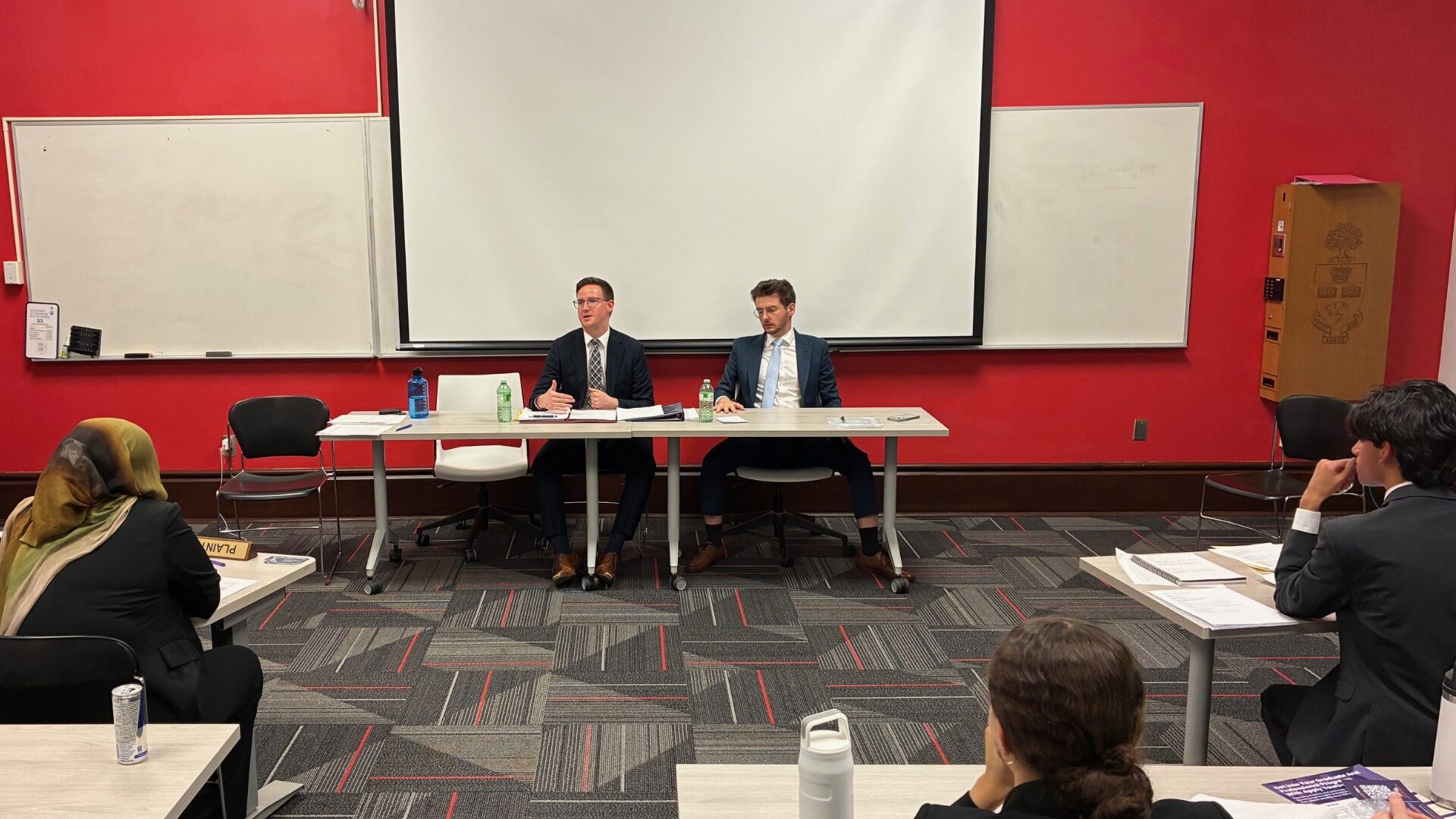
On November 29, 2025, medical malpractice lawyer Hudson Chalmers, of Davidson Cahill Morrison LLP, volunteered as a trial judge at the 8th Annual University of

On October 7, 2025, the Justice Schabas of the Ontario Superior Court of Justice released the long-awaited decision in Avedian et al v Enbridge Gas