Introduction
In more than 40 years representing injured clients, I can tell you that slip and fall accidents are far more common, and far more serious, than most people assume. Thousands of Ontarians are hurt this way every year, and what you do in the days that follow can make the difference between a strong claim and no claim at all. This guide explains what a slip and fall is, the injuries it can cause, who may be responsible, the practical steps to take right away, and the deadlines you cannot afford to miss.
What Counts as a Slip and Fall
A slip and fall happens when someone is hurt because of a hazard on another person’s property: a wet floor, an uneven surface, poor lighting, or, most often in this province, ice and snow. In Ontario these claims fall under the law of occupiers’ liability, which governs the responsibility of those who own or control a property toward the people who come onto it.
Common Injuries
I have seen slip and fall injuries that range from minor cuts and bruises to permanent disability and, in the worst cases, death. Wrist, ankle, and hip fractures are common, often because a person puts out a hand or twists while trying to break a fall. Head injuries, from concussions to serious traumatic brain injuries, can follow a strike to the head on a hard surface. Spinal injuries can cause lasting pain or reduced mobility, and soft tissue injuries, though they sound minor, can be genuinely disabling. Because the seriousness of a fall is not always obvious at first, prompt medical attention matters both for your health and for any claim that follows.
Who Is Responsible
Under Ontario’s Occupiers’ Liability Act, an occupier (the owner, a tenant, a property manager, or anyone else in control of the premises) must take reasonable care in all the circumstances to see that people on the property are reasonably safe. That includes maintaining the property and addressing hazards within a reasonable time. Liability turns on negligence: whether the occupier knew, or ought to have known, about the hazard and failed to deal with it as a reasonable occupier would have. Whether that standard was met in any given case depends on the facts and, often, on expert evidence about what reasonable maintenance required.
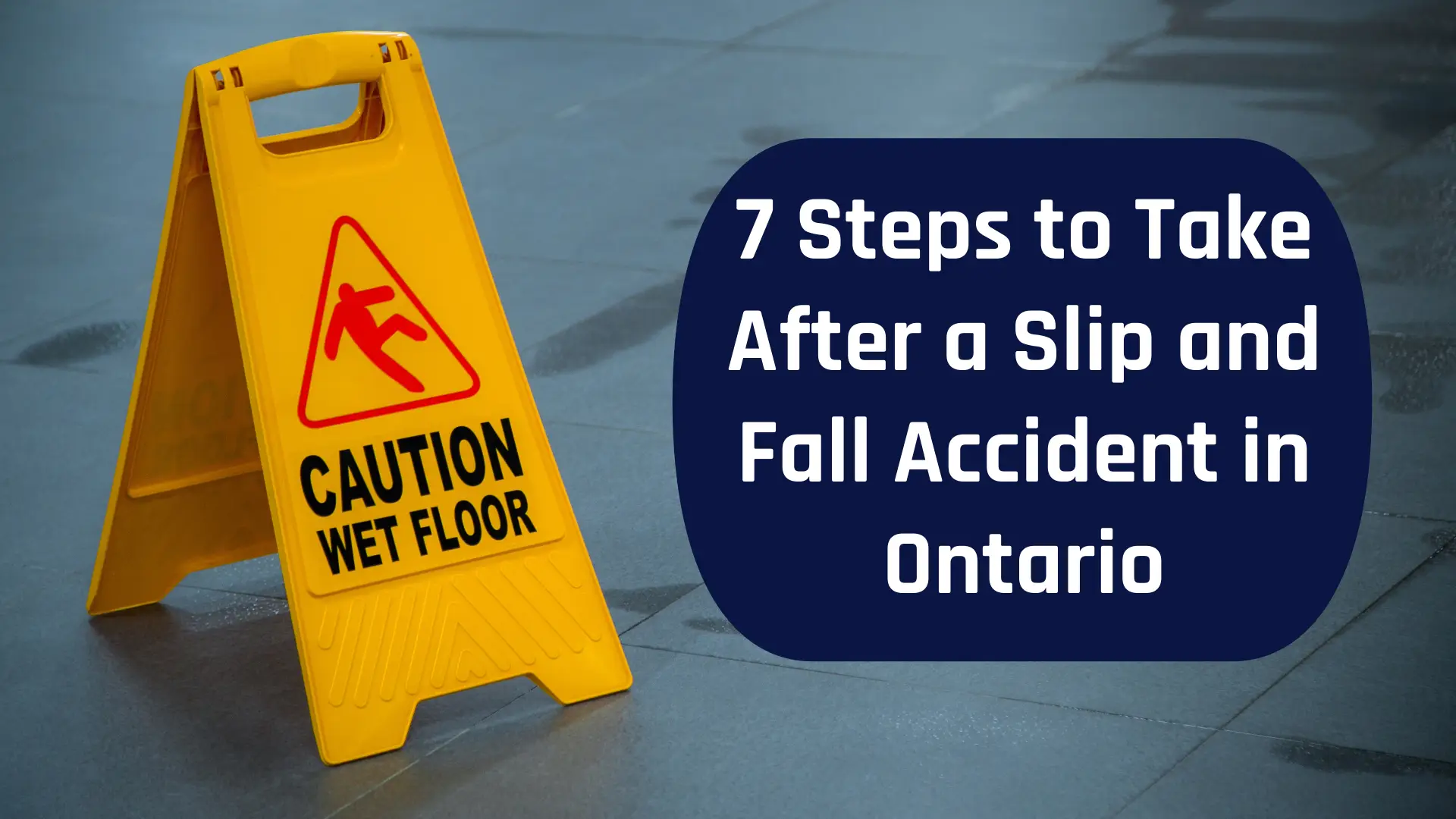
7 Steps to Take After a Slip and Fall
- Seek medical attention. Have your injuries assessed and documented by a healthcare professional, even if you think you can walk it off. The medical record is the foundation of any later claim.
- Report the fall. Tell the property owner, manager, or staff what happened and ask that an incident or accident report be completed. Note the name of the person you spoke with.
- Document the scene. Photograph exactly where you fell and the hazard that caused it, ideally before anyone clears or repairs it. In a winter fall, capture the ice, snow, and any lack of salt or sand.
- Get witness details. If anyone saw you fall, ask for their name and contact information. An independent witness can be decisive.
- Write down what happened. Record your own account while it is fresh: the date, the time, the exact location, what you were doing, and the conditions. Keep the footwear you were wearing.
- Do not accept blame. Be careful what you say at the scene and to any insurer. Do not apologize for the fall or speculate about fault, as those comments can be used against you later.
- Speak to a personal injury lawyer promptly. This matters more than people realize, because slip and fall claims carry short notice deadlines, explained below. Getting advice early protects your rights before a deadline can quietly run out.
Notice Periods and Deadlines
Slip and fall claims in Ontario run on more than one clock, and the most important one is short.
If your fall was caused by snow or ice on private property (a store parking lot, a condominium walkway, an apartment entrance, a commercial plaza), the Occupiers’ Liability Act requires you to give written notice of your claim within 60 days of the fall. This requirement was added by amendment and came into force on January 29, 2021 (section 6.1 of the Act). The notice has to set out the date, time, and location of the incident, and it must be personally served on, or sent by registered mail to, the occupier or the contractor responsible for snow and ice removal. Miss the 60-day window and your claim can be barred entirely, subject only to narrow exceptions, for example where the fall resulted in death, or where a judge is satisfied there was a reasonable excuse and the defendant is not prejudiced. Those exceptions are difficult to rely on, so the safe course is to give notice quickly and to the right parties.
The 60-day notice is not the same as starting a lawsuit. Even after giving notice, you generally still have two years from the date of the fall to begin the action under the Limitations Act, 2002.
Falls on municipal property follow a different and tighter framework. A fall on a city sidewalk or road is governed by the Municipal Act, 2001 (or, in Toronto, the City of Toronto Act, 2006), which can require written notice in as little as 10 days and holds a municipality responsible for snow and ice on a sidewalk only where its conduct amounts to gross negligence. Because the deadline that applies depends entirely on where and how you fell, this is the area where early legal advice pays off most.
How I Can Help
Pursuing a slip and fall claim, especially against an insurer or a well-resourced property owner, is rarely straightforward. I can identify the right parties and serve notice in time, gather and preserve the evidence, retain the medical and other experts a serious claim requires, deal with the insurance adjusters, and take the matter to trial if a fair settlement cannot be reached. Every claim also moves at its own pace; here is a realistic look at how long a personal injury claim takes. The earlier I am involved, the more I can do to protect your claim.
Conclusion
A slip and fall can have life-altering consequences, but the law gives you a path to compensation if you act in time and protect your evidence. The single most important takeaway is the 60-day notice rule for snow and ice claims: it is short, it is strict, and it catches people off guard. If you have been injured in a fall, contact us for a free consultation, and let us help you take the first step toward protecting your rights.