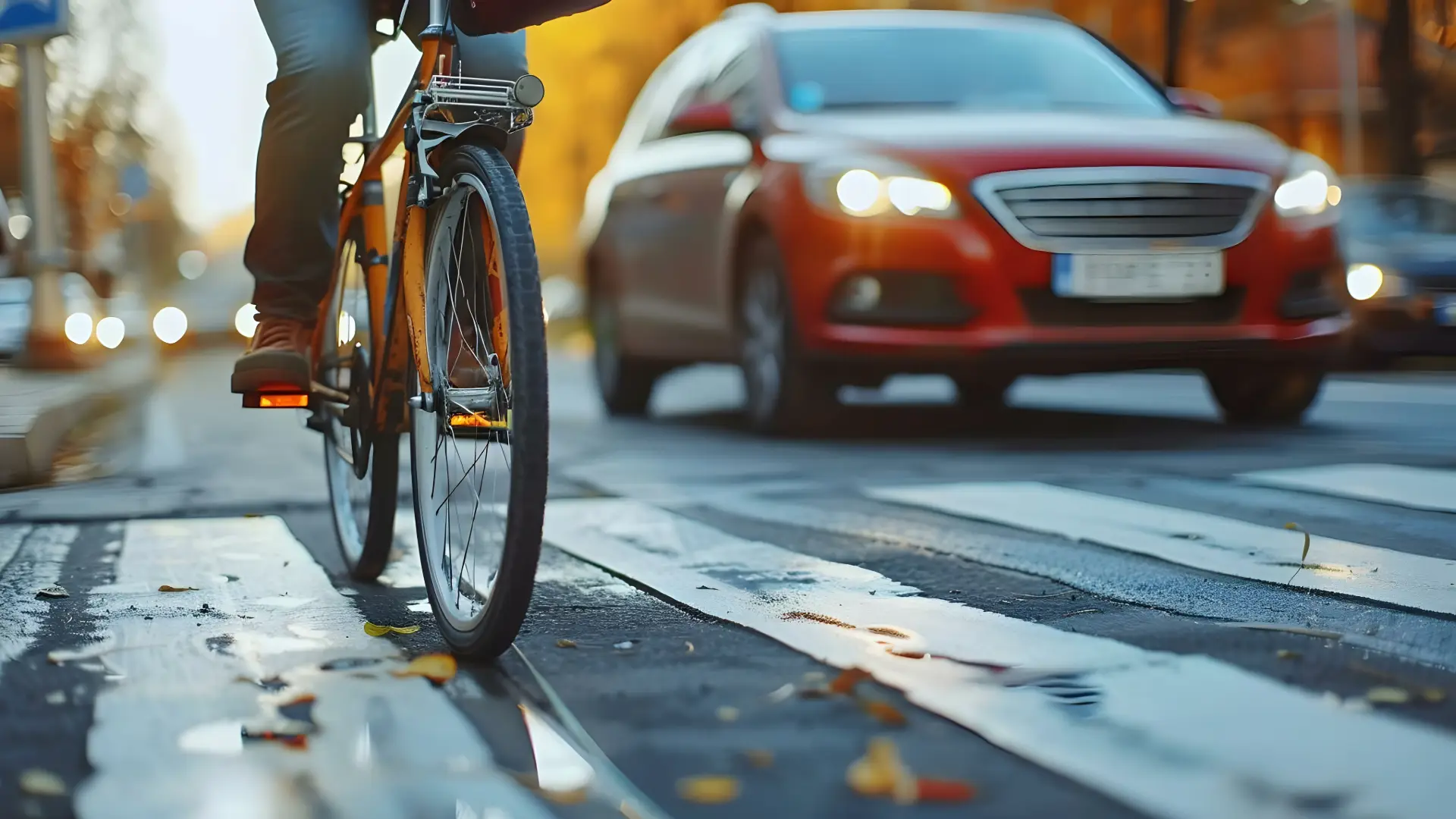
More Torontonians are on two wheels than ever, commuting, running errands, and riding for sport. Sharing crowded streets with cars, streetcars, and trucks carries real risk, and the rules that govern who can ride where have rarely been more contested. Whether you ride the Bloor lanes daily or only in summer, it pays to know the laws that protect you, the rules you have to follow, what to do if you are hit, and how you can be compensated for an injury. Here is a current, practical guide for Toronto cyclists.
Ontario’s Cycling Laws: What Every Toronto Rider Should Know
Under Ontario’s Highway Traffic Act (HTA), a bicycle is a vehicle, the same as a car or truck. That cuts both ways: you have the right to use the road, and you have to follow the rules of the road, including stopping at red lights and stop signs, riding in the same direction as traffic, and signalling your turns.
The equipment your bike needs
- Helmet: anyone under 18 must wear an approved bicycle helmet. For riders 16 and under, a parent or guardian is responsible for making sure they do. Helmets are not mandatory for adults, but they are strongly recommended, and the safety reasons are obvious.
- Lights and reflectors: from half an hour before sunset to half an hour after sunrise (and in poor visibility), your bike needs a white or amber front light and a red rear light or reflector, plus white reflective tape on the front forks and red on the rear. A flashing red rear light is allowed.
- Bell or horn: every bike must have a working bell, gong, or horn.
- Brakes: at least one brake that can skid the rear wheel on dry pavement.
The rules of the road
Ride as close as practicable to the right edge of the road, except when turning left, avoiding hazards, or taking the lane where it is too narrow to share safely. Bicycles are banned from 400-series highways and other expressways. In Toronto, sidewalk riding is prohibited for anyone aged 14 and over. And when a streetcar stops to load or unload passengers, you must stay at least two metres back from its doors until passengers have finished crossing.
The rules that protect you from drivers
Two HTA rules are aimed squarely at the most common ways cyclists get hurt:
- The one-metre passing rule: a driver must leave at least one metre of space when passing a cyclist, where practicable. Failing to do so carries a set fine of roughly $110 and two demerit points, with higher penalties in community safety zones.
- Dooring: it is an offence to open a vehicle door into the path of a cyclist. The set fine is about $365 with three demerit points, and a conviction can bring a fine of up to $1,000. “Dooring” is one of the signature hazards of riding next to parked cars in the city.
There is also a powerful rule that matters after a crash. Under section 193 of the Highway Traffic Act, when a motor vehicle strikes a cyclist, the law reverses the usual onus: in a civil claim, it is the driver who must prove they were not negligent, rather than the cyclist having to prove the driver was. For an injured cyclist, that is a meaningful legal advantage.
The Fight Over Toronto’s Bike Lanes
The single biggest cycling-law story in the province right now is the battle over Toronto’s protected bike lanes, and as of this writing it is not finished.
In late 2024, Ontario passed Bill 212, the Reducing Gridlock, Saving You Time Act, 2024. It amended the Highway Traffic Act to require municipalities to get the province’s approval before building bike lanes that remove a lane of motor vehicle traffic, and a late amendment directed the removal of about 19 kilometres of existing protected bike lanes on Bloor Street, Yonge Street, and University Avenue, to be replaced with vehicle lanes. The legislation also included provisions limiting the province’s and its contractors’ liability for collisions, injuries, or deaths on the affected roads. The government’s stated goal was easing congestion.
Cycle Toronto and two individual cyclists challenged the law, arguing that tearing out protected lanes would expose riders to a greater risk of serious injury and death, in violation of section 7 of the Charter (the right to life and security of the person). After an early injunction was refused, the court granted an injunction in April 2025 that paused the removals while the case was decided. In 2025, the Ontario Superior Court of Justice (Justice Schabas, 2025 ONSC 4397) struck down the removal provisions, finding the law arbitrary and its safety cost grossly disproportionate to the asserted traffic benefit, and holding that a later “reconfiguration” version of the law would offend the Charter in the same way.
Ontario appealed. The Court of Appeal for Ontario heard the appeal on January 28, 2026, and reserved its decision. For now, the Bloor, Yonge, and University lanes remain in place under the injunction, and the province has signalled it could invoke the notwithstanding clause. Because this is moving through the courts, confirm the current status before relying on it. The practical point for riders is simple: protected, separated lanes are safer than painted ones, and where you can use them, you should.
What to Do If You Are Hit by a Car While Cycling
If you are in a collision, the steps you take in the first hours protect both your health and any future claim.
- Get safe and get medical attention. Move out of traffic if you can, and see a doctor even if your injuries seem minor. Adrenaline masks symptoms, and a concussion or soft-tissue injury may not be obvious at first. Prompt medical records also document your injuries.
- Call the police. Ontario law requires that a collision causing personal injury, or property damage over $2,000, be reported. Get the officer’s name and the report number.
- Collect the details. Take down the driver’s name, licence, plate, and insurance information, and the names and numbers of any witnesses. Photograph the scene, the vehicle, your bike, and your injuries.
- Do not admit fault. Stick to the facts when speaking with the driver, the police, and insurers.
- Preserve the evidence. Keep your damaged bike, helmet, and clothing as they are. They can be important proof later.
- Get legal advice early. A lawyer can help you preserve your claim, deal with the insurers, and make sure you do not miss a deadline.
Your Right to Compensation as an Injured Cyclist
A cyclist hurt in a collision with a motor vehicle in Ontario generally has two avenues, and they work together.
First, you can claim accident benefits under Ontario’s no-fault system, regardless of who was at fault, and even if you do not own a car or have your own auto policy. These benefits, set by the Statutory Accident Benefits Schedule, cover things like medical and rehabilitation treatment and attendant care, and, for those who carry the coverage, income replacement. If you have no policy of your own, you typically claim through the insurer of the vehicle involved.
It is worth knowing that Ontario changed its accident-benefits system on July 1, 2026. Medical, rehabilitation, and attendant care remain available to anyone injured, but most other benefits became optional, and eligibility for those optional benefits narrowed. For collisions on or after that date, a cyclist who is not within a covered group on a responding policy may not be entitled to the optional benefits. The details matter, and our guide to applying for accident benefits after a car accident walks through what changed.
Second, you can bring a claim against the at-fault driver for the harm the accident benefits do not cover, including pain and suffering and income losses beyond the benefit caps. As noted above, the Highway Traffic Act’s reverse-onus rule puts the burden on the driver to show they were not negligent, which often strengthens an injured cyclist’s position. Our personal injury lawyers and Toronto car accident team handle exactly these claims.
Staying Safe on Toronto’s Streets
The law sets the floor; your own riding keeps you alive. A few habits make the biggest difference:
- Ride predictably. Hold a straight line, do not weave between parked cars, and signal your moves so drivers can anticipate you.
- Take the lane when you need it. At intersections, narrow stretches, and roundabouts, claiming the lane is often safer than hugging the curb.
- Stay out of the door zone. Leave room when passing parked cars, even where there is a painted lane.
- Be visible. Run lights even when they are not strictly required, wear bright or reflective clothing, and make eye contact with drivers before you trust them to yield.
- Watch for the right hook. A vehicle turning right across your path is a classic city collision; never assume a driver has seen you.
- Wear a helmet, whatever your age. It is the cheapest insurance you will ever buy.
Frequently Asked Questions
Do I have to wear a helmet to cycle in Toronto? Riders under 18 must, by law. Adults are not required to, but a helmet sharply reduces the risk of a serious head injury and is strongly recommended.
Can I ride my bike on the sidewalk? Not in Toronto if you are 14 or older. Sidewalk cycling is prohibited by the municipal bylaw, and you can be ticketed.
I was hit by a car on my bike, but I do not own a car. Can I still claim benefits? Yes. Accident benefits are no-fault and are available to injured cyclists even without their own auto policy, usually through the insurer of the vehicle involved.
If a driver doors me or hits me, do I have to prove they were at fault? When a motor vehicle strikes a cyclist, the Highway Traffic Act reverses the onus, so the driver must prove they were not negligent. That said, every case turns on its facts, and evidence still matters.
I was not wearing a helmet when I was injured. Can I still sue? Yes. Not wearing a helmet does not bar a claim, although if it contributed to a head injury, a court may reduce your damages for contributory negligence.
Talk to a Bicycle Accident Lawyer
If you or someone you love has been injured cycling in Toronto, you do not have to sort out the insurance and the law on your own. Our personal injury lawyers can help you understand your rights, claim the benefits you are entitled to, and pursue fair compensation from an at-fault driver. Contact us for a free consultation.